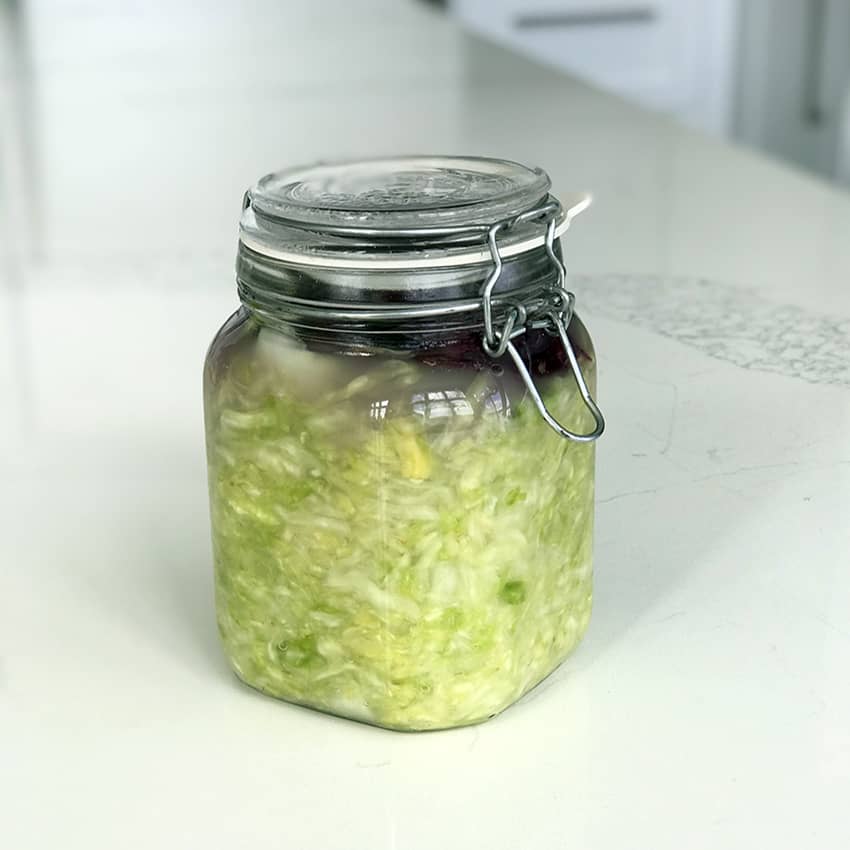
Homemade Sauerkraut
Sauerkraut! There is so much we can say about this amazing fermented cabbage.
Good source of:
- Vit C.
- Vit K.
- Iron.
- Excellent probiotic.
- High in fibre.
- Low in calories.
- Polyphenols (helps our gut).
- Can improve insulin sensitivity, lower high blood pressure and cholesterol.
What is sauerkraut?
Sauerkraut is made with cabbage, salt and time ⌛️. Cabbage is one of the most popular cruciferous vegetables used globally, and the best way to preserve it is to ferment.
Although the name sauerkraut sounds German, its origins go back to 2000 years, where pickled cabbage in rice wine was being fed to workers during the construction of the Great Wall of China.
History tells that fermented cabbage was brought to Europe by Genghis Khan approximately 1000 years ago. By the 12th century, used as a medicinal remedy for gout, inflammation, headaches, healing ulcers, and purification of blood in Germany.
Very similar to sauerkraut is kimchi from Korea, made with hot red pepper flakes.
Is Sauerkraut healthy?
Sauerkraut is an excellent source of fibre and good bacteria. It contains Vitamin C and Vitamin K2, Iron, and it’s low in calories.
Fermenting induces the structural breakdown of plant cell walls liberating antioxidants micronutrients like polyphenols, helping improve insulin sensitivity, lower high blood pressure and cholesterol, weight management and cardiovascular disease.
Sauerkraut contains more lactobacillus than yogurt, making it a better source for probiotics.
What other vegetable can I add to make sauerkraut?
You can add shredded carrots, beets, turnips, kale, radish. You can add ginger and/or turmeric, juniper berries, caraway seeds or herbs like dill.
Be aware that veggies like carrots and beets are higher in sugar, resulting in lightly alcoholic fermentation and a slimy brine. If you chose these veggies, use a small amount like 1to 2 carrots or 1 to 2 small beets per large cabbage (around 1kg or 2 Lb)
What do I need to make Sauerkraut?
It’s easy to make. All you need is 1 cabbage (preferably organic) and salt.
Your hands will do the work massaging and … in a glass jar to ferment it.
Should I use organic cabbage?
It’s preferable to use organic vegetables every time you can, but cabbage is included in the clean 15 list by the EWG. I personally remove the first leaf and wipe it with a clean damp cloth instead of running it under the tab. I know the City Health Counsel where I live add chlorine and other chemicals to the water to meet the safety standards, but I wonder what that will do to the bugs that will grow in my sauerkraut.
How to make quick Sauerkraut
1 Slice it in half cross-wise and save 1 or 2 leaf from one of my halves for the end.
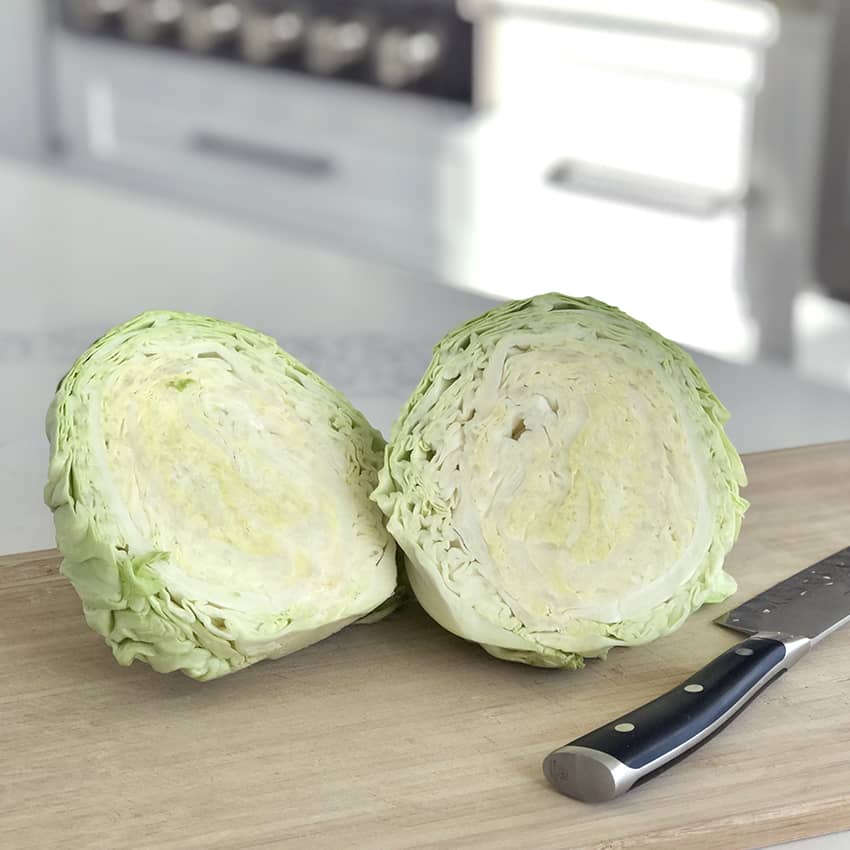
2 Remove the core and shred with a mandolin or simply cut thinly using a harp knife.
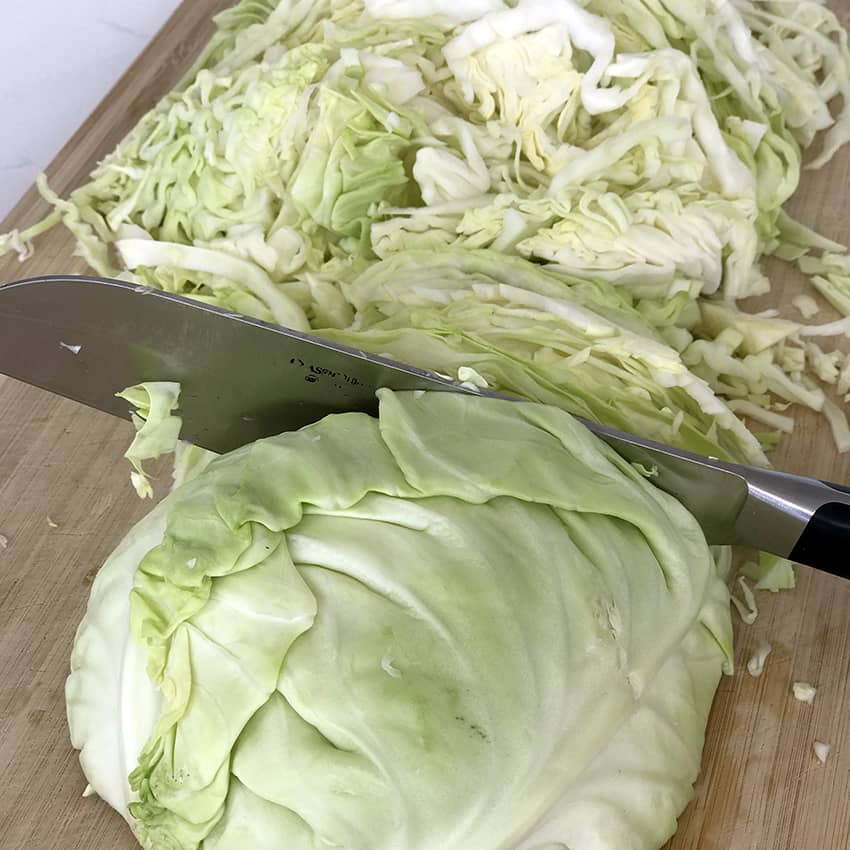
3 Transfer all (including flavours if you chose) to a bowl and add the sea salt.
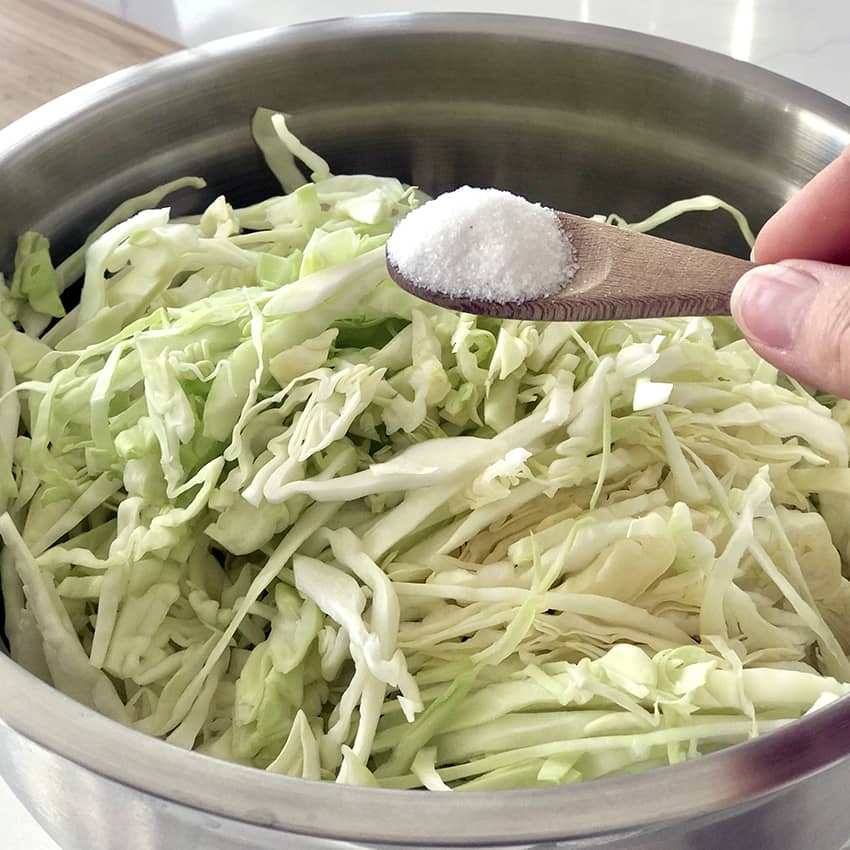
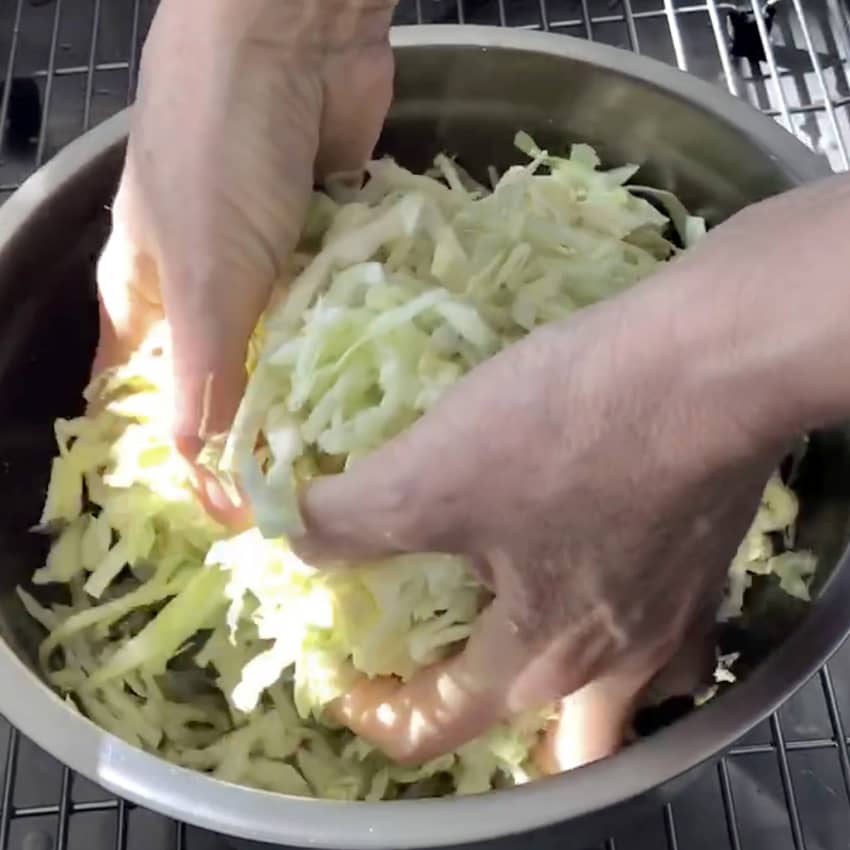
4 Massage the cabbage turning and squeezing for at least 10 minutes. By squeezing it, water will be released and the cabbage will soften.
5 Store in a clean glass jar pushing down with your fist or a wooden spoon. This is to release any air bubbles that can be trapped between the layers of cabbage. Do this until the jar is almost full. Now, rember that leaf that we saved?, now is the time to use it. Fold and put it on top as a barrier to keep everything under the brine and place weights over it. Use a rubber sealed lid and close tightly.
6 Leave your jar at room temperature between 2 – 4 weeks away from direct sunlight. When it’s ready, store in the fridge up to 6 months.
Print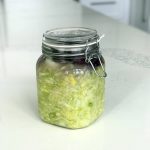
Sauerkraut
Ingredients
- 1 cabbage (750g to 1100g) can be white or red.
- 1 1/2 tbsp – 2 tbsp sea salt ( 2 to 3% the weight).
- Optional ( 1 tbsp shredded ginger or 4-6 juniper berries or any other veggies listed above).
- A wide-mouth glass jar with rubber seal lid.
Instructions
- First, remove the first leaf and any bruised leaves and cleaning the cabbage with a damp cloth. Make sure you are using a clean cutting board. Slice it in half cross-wise and save 1 or 2 leaves from one of the halves for the end. Remove the core and shred with a mandolin or cut thinly using a sharp knife. Transfer all (including other veggies if you choose to use them) to a large bowl and add the sea salt.
- Massage the cabbage, turning and squeezing for at least 10 minutes. By squeezing it, water will be released, and the cabbage will soften.
- Transfer to a clean glass jar pushing down with your fist or a wooden spoon. This is done to release any air bubbles that can be trapped between the layers of cabbage. Continue doing this until the jar is almost full. Now, remember that leaf that we saved? now is the time to use it.
- Fold and put it on top as a barrier to keep everything under the brine and place weights over it. Use a rubber-sealed lid and close the jar. You can use a rock or marbles as a weight; make sure you first clean and boil the rock for eat least 20 minutes to kill any harmful bacteria. You can also boil the marbles and, after cooled, wrap them in cheesecloth and place them on top to make sure the entire batch of sauerkraut is under the brine. There is no need to use an airlock lid to make sauerkraut, but you can use it if you like.
- Leave your jar at room temperature between 2 – 4 weeks away from direct sunlight. When it’s ready, store it in the fridge for up to 6 months.
Notes
Look for any signs of mold or strange smell. if this happens discard and start over.