Ingredients
Scale
- 1 cabbage (750g to 1100g) can be white or red.
- 1 1/2 tbsp – 2 tbsp sea salt ( 2 to 3% the weight).
- Optional ( 1 tbsp shredded ginger or 4-6 juniper berries or any other veggies listed above).
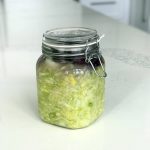
- A wide-mouth glass jar with rubber seal lid.
Instructions
- First, remove the first leaf and any bruised leaves and cleaning the cabbage with a damp cloth. Make sure you are using a clean cutting board. Slice it in half cross-wise and save 1 or 2 leaves from one of the halves for the end. Remove the core and shred with a mandolin or cut thinly using a sharp knife. Transfer all (including other veggies if you choose to use them) to a large bowl and add the sea salt.
- Massage the cabbage, turning and squeezing for at least 10 minutes. By squeezing it, water will be released, and the cabbage will soften.
- Transfer to a clean glass jar pushing down with your fist or a wooden spoon. This is done to release any air bubbles that can be trapped between the layers of cabbage. Continue doing this until the jar is almost full. Now, remember that leaf that we saved? now is the time to use it.
- Fold and put it on top as a barrier to keep everything under the brine and place weights over it. Use a rubber-sealed lid and close the jar. You can use a rock or marbles as a weight; make sure you first clean and boil the rock for eat least 20 minutes to kill any harmful bacteria. You can also boil the marbles and, after cooled, wrap them in cheesecloth and place them on top to make sure the entire batch of sauerkraut is under the brine. There is no need to use an airlock lid to make sauerkraut, but you can use it if you like.
- Leave your jar at room temperature between 2 – 4 weeks away from direct sunlight. When it’s ready, store it in the fridge for up to 6 months.
Notes
Look for any signs of mold or strange smell. if this happens discard and start over.